

📱 Open camera → scan
🐾 Before This Story: The One Tool That Helped Him Heal
When I rescued this white Pitbull puppy, he was anxious, overstimulated, and unable to settle. The single most effective calming ritual we found was simple: daily brushing with a quality pet hair brush.
Pet brushes deliver gentle deep-pressure stimulation that activates the parasympathetic nervous system — the same pathway that calms anxious children with weighted blankets. For a newly rescued dog, 5 minutes of brushing before bed became our most powerful bonding and decompression tool.
amzn.to/4dtx2U4 · affiliate
Some stories change you. Not slowly, over years — but in an instant, in the space between a glance and a decision. For me, that moment came in an office parking lot on an ordinary afternoon, when I looked out the window and saw a small white figure sitting alone on the asphalt. A puppy. A white Pitbull puppy, no older than a few months, small enough to hold in two hands, sitting perfectly still as if waiting for something — or someone.
I stood at the window longer than I should have. Then I heard the manager’s voice: “If no one comes to take him by the end of the day, we’ll have to get rid of him.”
Something shifted in me right then. A quiet kind of certainty. I didn’t think about my other pets. I didn’t think about the adjustment period, the vet bills, the time. I just knew: this puppy was not going to spend his last moments in a parking lot.
This is his story. And in telling it, I hope to help others understand what it means to rescue a Pitbull — the beauty, the responsibility, the extraordinary depth of trust these dogs are capable of giving.
The Decision That Changes Everything
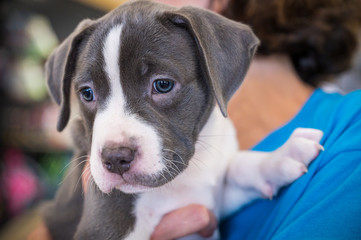
When you rescue a dog — especially a Pitbull — you are not simply adopting a pet. You are entering into a relationship built on the ruins of broken trust. Most Pitbulls who end up abandoned, stray, or in shelters have experienced some form of neglect, instability, or fear. Their nervous systems are on high alert. Their baseline state is vigilance, not ease.
That evening, when I gathered my things and walked down to the parking lot, the puppy watched me approach with enormous amber eyes. He didn’t run. He didn’t bark. He sat very still — the way animals do when they’ve learned that stillness is the safest response to uncertainty. I knelt down. He sniffed my hand. And then, very slowly, he leaned his head against my palm.
That was when I understood that rescuing this dog would require everything I had to give.
The First Night: Building Trust From Zero
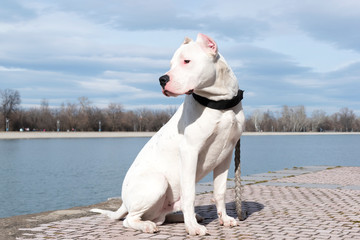
Bringing a rescued Pitbull puppy home for the first time is both magical and heartbreaking. Magical, because you witness the first small sparks of trust beginning to form. Heartbreaking, because you see the residue of everything they’ve been through — the flinching at sudden sounds, the wide-eyed vigilance, the way they hover near you without quite daring to relax.
I prepared a meal for him — simple, warm, easy to digest. He ate it all, quickly, the way dogs eat when they’ve been hungry long enough to not trust that another meal is coming. I ran a bath. His first bath. I expected resistance. Every animal instinct in him could have said no. But he was surprisingly, heartbreakingly calm. He stood in the warm water and let me wash him, occasionally looking up at me with those amber eyes, as if checking — still here? Still safe?
Rescued dogs communicate volumes in small gestures. A relaxed body in the bath is not just compliance — it is the beginning of surrender to safety. It is a dog deciding, for the first time, that perhaps the world can be trusted after all.
The Vet Visit: What We Found
The next morning, I took him to the veterinarian. I needed to know his age, his health, whether he’d been vaccinated, whether there was anything I needed to address urgently.
The vet’s assessment was equal parts sobering and hopeful: the puppy was hungry and dehydrated, clear evidence he’d been without proper food and water for at least a day or two. He had some minor skin irritation, consistent with spending time outdoors without shelter. But structurally, he was healthy — heart strong, lungs clear, no serious injuries.
“The dehydration explains the lethargy,” the vet said. “But he’s a fighter. You can see it in his eyes.”
Pitbulls have a survival instinct that borders on the extraordinary. They are bred for tenacity, for resilience, for an almost stubborn refusal to give up. Even this puppy — small, hungry, alone — had held onto life with both paws. He had waited in that parking lot not because he was defeated, but because he believed, on some level, that help was coming.
Understanding Pitbull Anxiety in Rescued Dogs
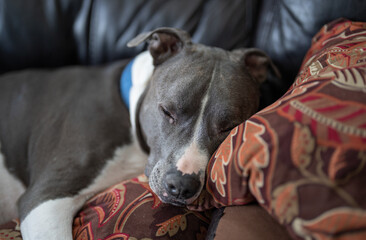
One of the most important things anyone can understand before rescuing a Pitbull is the relationship between this breed and anxiety. Pitbulls are exceptionally emotionally sensitive dogs — more so, in many ways, than other breeds. This is not weakness. It is, again, a product of their history: bred for close human partnership, deeply attuned to their owners’ emotional states, and profoundly affected by instability, abandonment, or neglect.
A rescued Pitbull who appears calm on the outside may be experiencing significant internal stress. Signs of anxiety in rescued Pitbulls include: excessive panting, restlessness, repetitive behaviors such as circling or licking, difficulty settling, sensitivity to sound, clinginess with their primary caregiver, and sudden changes in appetite. The white Pitbull puppy I rescued showed several of these — particularly the vigilance, the inability to fully relax, and the way he followed me from room to room in those first days.
Understanding these behaviors not as “bad behavior” but as anxiety responses is the first step toward helping a rescued Pitbull heal.
The Adjustment Period: Patience Is the Most Powerful Tool
In the early days, I kept the white Pitbull separated from my other pets. This was not rejection — it was respect. A new dog entering a home with existing animals needs space to decompress, to learn the scents and sounds of the environment without the added social pressure of navigating canine hierarchies. Throwing a newly rescued dog immediately into a multi-pet household is one of the most common and most costly mistakes rescuers make.
The adjustment period for a rescued Pitbull can last anywhere from a few days to several months, depending on the dog’s history, temperament, and the quality of care they receive. During this time, consistency is everything. Same feeding times. Same walking routes. Same tone of voice. Same calm, predictable routines that gently communicate: this place is safe. You are safe. I am not going anywhere.
Research in animal behavior consistently shows that dogs regulate their nervous systems through the emotional state of their primary human. If you are calm, your dog is more likely to be calm. If you are anxious or unpredictable, your dog’s stress response will mirror that. For Pitbulls especially, who are hardwired to read and respond to human emotion, your presence is the most powerful anxiety-reducing tool you have.
Pitbull Behavior: Separating Myth from Reality
Pitbulls are among the most misunderstood dog breeds in the world. Decades of media misrepresentation, breed-specific legislation, and selective reporting on bite incidents have created a public image of the Pitbull as dangerous, unpredictable, and inherently aggressive. The reality could not be further from the truth.
American Pit Bull Terriers consistently score above average in temperament tests conducted by the American Temperament Test Society. Studies on dog bite incidents consistently show that owner behavior, training history, and socialization are far stronger predictors of aggression than breed. The American Veterinary Medical Association does not support breed-specific legislation, citing the lack of scientific evidence that targeting a specific breed makes communities safer.
What Pitbulls are, at their core, is this: devoted. Intensely, almost recklessly devoted to the humans who love them. They form bonds that run very deep, and they carry the trauma of broken bonds very heavily. A Pitbull who has been abandoned or abused does not become dangerous — he becomes sad. And in that sadness, he becomes more dependent than ever on the humans willing to show up for him.
How Dog Fashion Can Support Pitbull Anxiety Recovery
One of the less obvious but increasingly well-supported tools for managing anxiety in rescued dogs — particularly large, sensitive breeds like Pitbulls — is wearable anxiety relief: snug-fitting garments, calming wraps, and sensory-targeted accessories that provide the kind of deep-pressure stimulation known to reduce the physiological markers of stress.
The science behind this is grounded in the same principles that inform the use of weighted blankets for humans with anxiety: deep pressure stimulation activates the parasympathetic nervous system, which is responsible for the body’s “rest and digest” state. For a dog whose nervous system is stuck in hypervigilance mode — as is common in recently rescued Pitbulls — anything that reliably activates the parasympathetic response can be genuinely life-changing.
At DogFashion.org, we curate anxiety-relief dog fashion that is designed with exactly these dogs in mind: breeds who are emotionally sensitive, historically neglected, and in need of solutions that work as hard as they do. Our collection includes snug-fit bodysuits, calming wraps, and sensory-comfort accessories — all designed to be both functional and genuinely stylish, because your dog deserves both.
🐾 Is Your Pitbull Anxious or Recently Rescued?
Discover science-backed anxiety-relief dog fashion designed for sensitive breeds.
“Maybe He Wasn’t Abandoned. He Just Reached His Destination.”
It has been a few weeks now since I brought the white Pitbull puppy home. He has a name. He has a bed. He has a routine that is slowly becoming familiar to him, and a face — mine — that he now greets every morning with the kind of joy that makes you wonder how you ever got through a day without it.
He is still learning. He still startles at loud sounds. He still checks, sometimes, to make sure I am still in the room. But there are moments — longer and more frequent now — when he simply lies down, takes a deep breath, and rests. Not because he has been forced into calm, but because he has chosen it. Because this place has become, slowly, somewhere he trusts.
The last thing he did before he fell asleep that first night was look at me. Not with fear, not with uncertainty — but with something that looked, very much, like gratitude. As if he knew, on some ancient animal level, that the long wait in the parking lot had been worth it.
Maybe he wasn’t abandoned at all. Maybe he had simply not yet arrived at the place he was always meant to be. And all he had to do was wait there — still, patient, trusting — until the right person looked out the window.
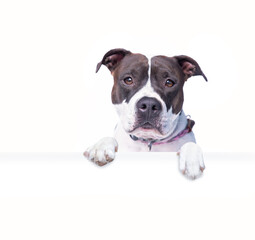
“Maybe he wasn’t abandoned. He just reached his destination.”
If you have a rescued Pitbull — or any dog carrying the weight of an uncertain past — know that the work you are doing matters more than you can see. Every consistent routine, every calm morning, every moment of patient presence is registered in your dog’s nervous system as evidence that the world can be safe. You are not just caring for a dog. You are rewriting their story.
For tools, tips, and stylish solutions to help your anxious dog thrive, explore everything at DogFashion.org.
Keywords: pitbull rescue, abandoned pitbull puppy, white pitbull rescue story, pitbull anxiety, rescued dog adjustment period, pitbull behavior, dog separation anxiety, Pitbull puppy care, rescue dog stress, dog fashion anxiety relief, dogfashion.org